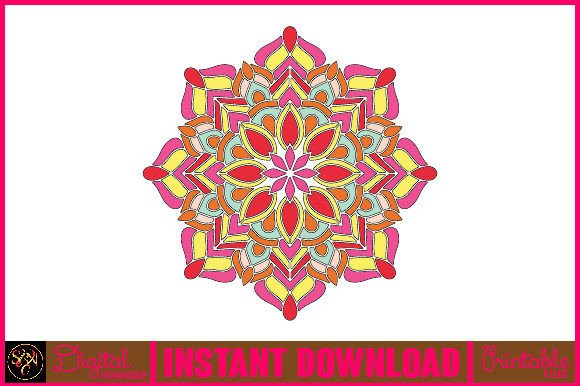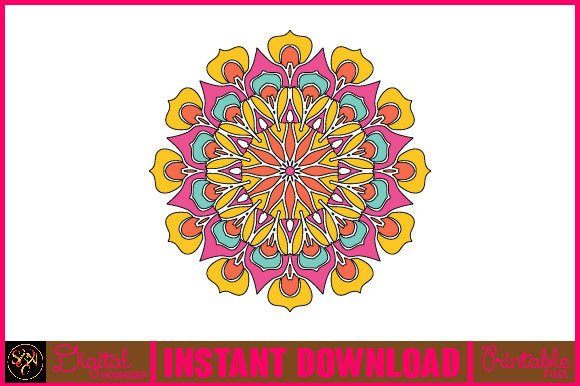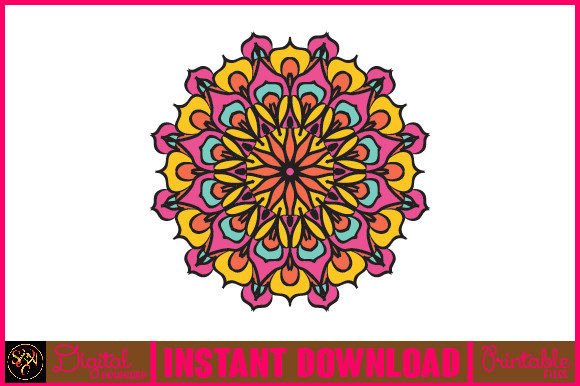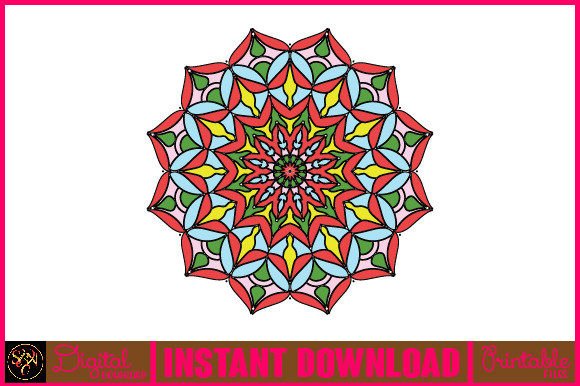
Mandala 3D Layered SVG Cut File-94
In the landscape of digital design and physical production, the transition from a concept on a screen to a tangible product is often where projects stall or lose quality. This friction point is particularly acute for small business owners, freelancers, and hobbyists who rely on vector-based cutting machines like Cricut or Silhouette. The Mandala 3D Layered SVG Cut File-94 addresses this gap by providing a high-fidelity, multi-layered asset designed specifically for seamless integration into creative workflows. Unlike standard flat designs, this file leverages depth and complexity, offering a versatile foundation for everything from apparel printing to social media branding.
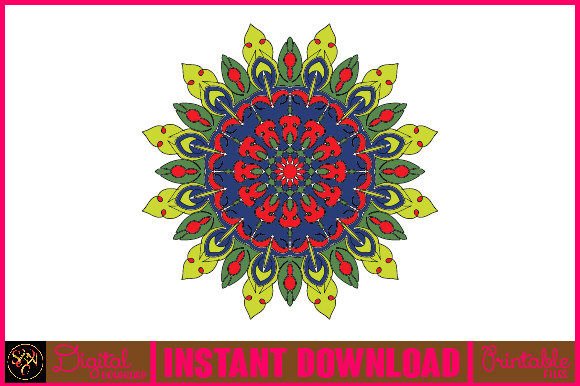
The core value of this asset lies not just in its aesthetic appeal—a hand-drawn colorful mandala with tribal ornamentation—but in its structural integrity as a digital tool. For professionals managing tight deadlines or entrepreneurs scaling their product lines, having a pre-organized, layered file reduces preparation time significantly. It allows designers to focus on execution rather than troubleshooting vector paths or manually separating elements that should have been distinct layers from the start.
Understanding the Asset Structure
To fully utilize Mandala 3D Layered SVG Cut File-94, one must first understand its composition. The file is delivered in a ZIP package containing four distinct formats: an EPS file, an SVG file, a JPG preview, and a PNG preview. Each format serves a specific role in the production pipeline.
- SVG (Scalable Vector Graphics): This is the primary working file for most cutting machines and vector editing software like Adobe Illustrator or Inkscape. The "layered" aspect means that different parts of the mandala—such as the outer tribal rings, the inner geometric patterns, and the central focal points—are separated into individual groups. This separation is critical for creating 3D effects through layering, color blocking, or partial etching on materials.
- EPS (Encapsulated PostScript): Often used in professional print environments, the EPS file ensures compatibility with older desktop publishing software and high-end commercial printers. It preserves vector data at a resolution independent of pixel density, ensuring crisp edges regardless of how large the final output is scaled.
- JPG and PNG: These raster images serve as quick-reference previews. They are essential for visualizing the final look before committing resources to production. The PNG version, typically with a transparent background, is particularly useful for placing the design directly onto mockups or digital banners without needing to remove a white background manually.
Integration into Physical Production Workflows
The most immediate application of this mandala design is in physical merchandise creation. The description highlights its suitability for t-shirts, hoodies, canvas bags, mugs, and stationary. However, successful implementation requires more than just dropping the file into a printer; it demands strategic planning around material properties and finishing techniques.
Apparel and Textile Printing
When applying Mandala 3D Layered SVG Cut File-94 to garments, the layered nature of the SVG allows for sophisticated design choices. Instead of a single-color print, creators can use the layers to create a faux-3D effect using contrasting colors of vinyl or fabric paint. For instance, the outer tribal ring could be printed in a dark navy, while the inner geometric shapes are left in white or a vibrant accent color, mimicking depth without the cost of complex embroidery.
For heat transfer vinyl (HTV) users, the layer separation is vital. Each layer can be cut from a different color of vinyl and weeded separately. By stacking these cuts, you achieve a dimensional look that stands out against the fabric texture. This process requires careful alignment, but starting with a pre-seated SVG file eliminates the guesswork of which lines connect to which, reducing error rates during the cutting phase.
Home Decor and Stationery
Beyond apparel, this design fits seamlessly into home decor and office supply lines. On canvas bags, the intricate details of the mandala add a premium feel that appeals to consumers looking for unique, artistic accessories. When printing on posters or framed art, the high-resolution capability of the EPS and SVG files ensures that even when enlarged to poster size, the tribal ornaments remain sharp and legible.
For stationery items like notebooks or planners, the design can be scaled down to fit as a cover motif or repeated as a subtle pattern along the spine. The versatility of the file allows for both bold, statement-making applications and subtle, elegant uses, depending on the target audience’s preferences.
Digital Applications and Brand Consistency
In today’s hybrid market, physical products rarely exist in isolation. They are supported by a robust digital presence. Mandala 3D Layered SVG Cut File-94 extends its utility into the digital realm, serving as a key asset for marketing materials and social media content.
Social Media and Web Design
The included PNG file, with its transparent background, is ideal for overlaying the mandala onto website headers, email newsletters, or Instagram stories. Because the design is colorful and ornamental, it draws the eye naturally, making it effective for highlighting sales announcements or new product launches. The tribal aesthetic adds a sense of bohemian elegance or spiritual grounding, which can help define a brand’s voice and attract a specific demographic.
For flyers and event posters, the mandala can act as a framing device. By placing text within the negative space of the central layers, designers create a balanced composition that guides the viewer’s attention to the core message. The scalability of the vector source files means that whether the flyer is viewed on a mobile screen or printed as an A3 poster, the image quality remains consistent.
Stickers and Small Goods
Stickers are a low-cost, high-volume entry point for many small businesses. The detailed nature of the mandala makes it suitable for die-cut stickers that can be applied to laptops, phones, and water bottles. The precision of the SVG file ensures that the cutting machine follows the intricate curves of the tribal ornaments accurately, resulting in clean edges that enhance the perceived value of the sticker. Users can experiment with different finishes, such as holographic or matte vinyl, to give the same design multiple variations for different customer segments.
Technical Considerations and Best Practices
While the asset is ready for use, integrating it smoothly into your workflow requires attention to technical details. Here are practical tips for maximizing the potential of Mandala 3D Layered SVG Cut File-94.
- Software Compatibility: Always open the SVG file in a vector editor before sending it to a cutter. Check that all paths are closed and that there are no overlapping nodes that could confuse the cutting software. While the file is organized, minor adjustments may be needed based on the specific capabilities of your machine.
- Color Management: If you are printing physically, remember that RGB colors (used on screens) do not translate perfectly to CMYK or spot colors (used in print). Use the EPS file if your printer requires CMYK conversion, and perform a test print on scrap material to verify color accuracy, especially if using vibrant tribal hues.
- Layer Organization: Keep the layer structure intact when editing. Renaming layers descriptively (e.g., "Outer Ring," "Inner Detail") helps maintain order, especially if you plan to reuse the design in future projects or collaborate with other team members.
- Scaling Proportions: When resizing the mandala, ensure that you lock the aspect ratio to prevent distortion. This is particularly important for circular designs like mandalas, where stretching can ruin the symmetry and aesthetic balance.
Long-Term Value and Versatility
Investing in a well-structured digital asset like Mandala 3D Layered SVG Cut File-94 offers long-term benefits beyond a single project. Its multi-format delivery means it can adapt to changing technological needs. As you move between different software platforms or production methods, having both vector and raster versions ensures continuity.
Furthermore, the timeless nature of mandala and tribal art means the design has a longer shelf life than trend-dependent graphics. It can be used seasonally, for year-round collections, or adapted for various cultural events and themes. This flexibility reduces the need to constantly search for new assets, allowing creators to build a cohesive brand identity over time.
By understanding how this file interacts with various tools—from cutting plotters to graphic design suites—users can streamline their creative process. The result is a more efficient workflow, higher quality outputs, and a greater ability to meet customer expectations consistently. Whether you are launching a new line of eco-friendly tote bags or refreshing your online store’s visual identity, this mandala provides a reliable, high-quality foundation for execution.