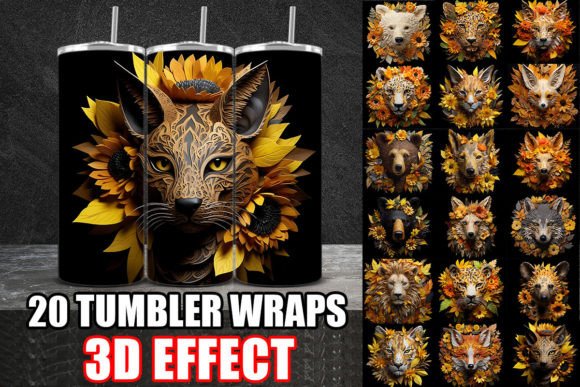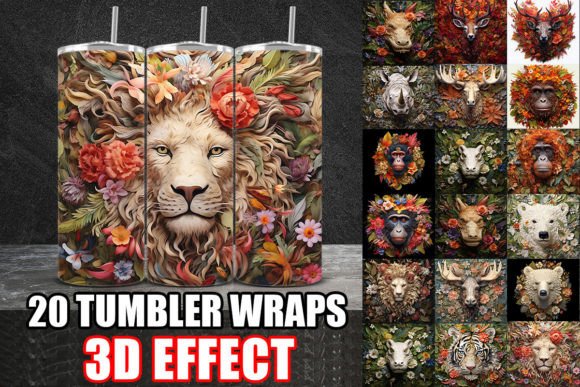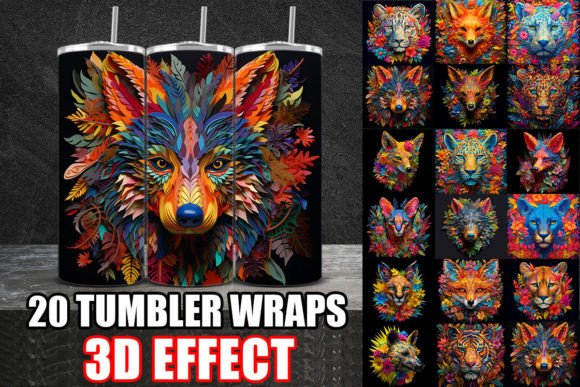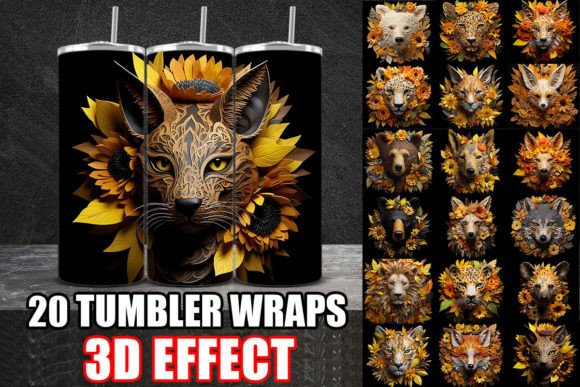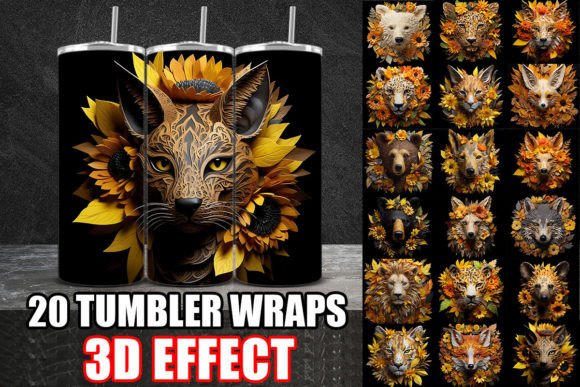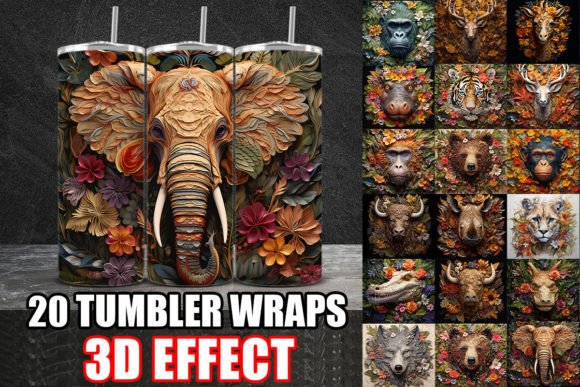
3D Flowers Wild Animals Tumbler Wrap
In the crowded landscape of digital design assets, finding a graphic that balances intricate detail with commercial viability can be a challenge. The 3D Flowers Wild Animals Tumbler Wrap stands out as a robust solution for creators looking to add depth and narrative to their physical products. This is not merely a flat pattern; it is a carefully composed scene designed specifically for cylindrical applications, such as tumblers, water bottles, and mugs. By combining the organic softness of floral elements with the bold, recognizable silhouettes of wild fauna, this design creates a visual tension that is both playful and sophisticated.
The appeal of this asset lies in its versatility and high-fidelity execution. Whether you are a small business owner producing limited-run merch or a hobbyist crafting personalized gifts, the ability to seamlessly wrap complex imagery around a curved surface without distortion is critical. This particular design addresses that need by offering a layout that accounts for the curvature of standard drinkware, ensuring that the animals and flowers interact naturally rather than appearing stretched or disjointed. It transforms a simple stainless steel cup into a statement piece, leveraging the current trend of nature-inspired aesthetics that resonate strongly with adult consumers aged 20 to 50.
Visual Characteristics and Artistic Appeal
At first glance, the 3D Flowers Wild Animals Tumbler Wrap commands attention through its rich textural quality. The "3D" aspect refers to the shading and lighting effects applied to the illustrations, giving the flowers petals volume and the animal fur a sense of weight and realism. This is achieved through careful use of gradients and shadows within the PNG format, which allows the background to remain transparent. When printed on a sublimation wrap, these details pop against the metal surface of the tumbler, creating an illusion of depth that flat vector graphics often lack.
The composition typically features a harmonious blend of lush botanicals—such as roses, peonies, or wildflowers—intertwined with majestic creatures like lions, elephants, wolves, or bears. This juxtaposition serves a dual purpose: it appeals to those who appreciate fine art photography styles while also satisfying a love for wildlife conservation themes. The color palette is generally vibrant yet grounded, utilizing earth tones mixed with vivid floral hues to create a look that feels modern rather than dated. For designers, this means the asset fits well within contemporary branding trends that favor organic shapes and natural motifs over rigid geometric patterns.
Furthermore, the artistic style strikes a balance between realism and stylization. The animals are not cartoonish, nor are they strictly photorealistic; instead, they occupy a middle ground that makes them approachable and emotionally engaging. This stylistic choice broadens the potential audience, making the design suitable for a wider range of marketing campaigns and personal projects. The seamless integration of flora and fauna suggests a cohesive ecosystem, adding a layer of storytelling to the product itself.
Practical Applications Across Industries
While the primary intended use is for wrapping tumblers, the utility of this design extends far beyond drinkware. Because it is provided in a high-resolution PNG format at 300 DPI, it retains clarity even when scaled down or adapted for different mediums. This flexibility makes it a valuable addition to any designer’s toolkit, particularly for those working in print-on-demand (POD) businesses.
- Packaging Design: The intricate details make it ideal for premium packaging labels, especially for eco-friendly brands or artisanal goods where visual appeal drives purchase decisions.
- Social Media Graphics: Use cropped sections of the wrap as eye-catching backgrounds for Instagram posts or Pinterest pins, highlighting specific elements like a lion’s face or a blooming rose.
- Editorial Design: Incorporate the artwork into magazine layouts or blog headers to convey themes of nature, adventure, or luxury lifestyle content.
- Apparel and Accessories: While designed for cylinders, the core imagery can be extracted and placed on t-shirts, tote bags, or stickers, offering cross-merchandising opportunities for brand identity consistency.
- Home Decor: Adapt the pattern for throw pillows, wall art prints, or notebook covers, tapping into the growing market for home office and study accessories.
For marketers, the key advantage here is the emotional connection the imagery fosters. People project their values onto the products they carry. A tumbler featuring wild animals and flowers can signal an appreciation for nature, strength, and beauty simultaneously. This allows brands to communicate their ethos without using explicit slogans, relying instead on visual semiotics to engage their target demographic.
Technical Specifications and Usage Guidelines
Understanding the technical delivery of the 3D Flowers Wild Animals Tumbler Wrap is essential for achieving professional results. You receive one ZIP file containing the PNG asset, which is crucial for maintaining the transparency needed for clean printing. The 300 DPI resolution ensures that when you scale the image to fit various tumbler sizes—from 20oz travel mugs to 40oz large-capacity cups—the edges remain crisp and free from pixelation. However, it is important to remember that digital screens and physical printers interpret colors differently. Always perform a test print on a small section before committing to a full production run, as monitor calibration can lead to discrepancies in hue saturation.
When preparing the file for sublimation printing, consider the directionality of the design. Most tumbler wraps are designed to be read horizontally around the cylinder. Ensure your printing software correctly maps the 2D image to the 3D curve of the blank. Misalignment can result in the animal’s eyes being cut off at the seam or the floral border breaking awkwardly. Using design software that supports custom shape mapping or specialized tumbler wrap templates will help maintain the integrity of the composition.
Commercial licensing is another critical factor. As an entrepreneur, you must verify the terms of use associated with the download. Typically, these assets allow for unlimited commercial sales of physical products, meaning you can sell as many wrapped tumblers as you wish. However, redistributing the digital file itself is usually prohibited. Keeping your records organized and understanding these boundaries protects your business from legal complications and respects the intellectual property rights of the creator.
Strategic Recommendations for Creators
To maximize the impact of this design, integrate it into a broader brand strategy. If you are launching a new line of outdoor gear, pair the tumbler wrap with complementary graphics that share similar color palettes and thematic elements. Consistency across touchpoints builds recognition. Additionally, leverage the "3D" aspect in your marketing materials. Show close-up shots that highlight the texture and depth of the print, demonstrating the quality of your production process to potential customers.
Experiment with pairing this bold visual with minimalist typography. Since the artwork is detailed and colorful, keep any accompanying text simple and legible. A clean sans serif font can provide a modern contrast to the organic shapes, enhancing readability without competing for attention. This approach aligns with current best practices in web design and social media graphics, where clutter-free visuals perform better in capturing user engagement.
Finally, stay attuned to seasonal trends. Nature-themed designs often see spikes in popularity during spring and summer months, but the timeless appeal of wildlife ensures year-round relevance. By treating the 3D Flowers Wild Animals Tumbler Wrap not just as a standalone graphic but as a versatile component of your creative workflow, you can unlock its full potential across multiple platforms and product lines. This strategic mindset separates hobbyists from successful small business owners, turning a single design asset into a sustainable revenue stream.